
Movement support · Children 3–18 · Varsity Lakes, Gold Coast
Movement support for neurodivergent children at your child’s pace
For autistic children, children with ADHD, and kids who find touch, coordination or sitting still harder than most. Sessions focus on comfortable movement, motor control and muscle tension around the spine — unhurried, predictable, and with you in the room the whole time.
What this is, and what it isn’t. I don’t assess, diagnose or treat autism, ADHD or any developmental condition — that’s the role of your child’s GP, paediatrician, psychologist, occupational therapist, speech pathologist or physiotherapist. My work with neurodivergent children is about movement, muscle tone, and how comfortable your child’s body is with being moved and touched.
What sessions focus on
Movement, tone and comfort — not labels
Many neurodivergent children move in their own way. Some hold a lot of tension through the back and neck, some find balance or coordination tiring, and some find unexpected touch overwhelming. Sessions are built around what your child’s body is doing today, not around a diagnosis.
Motor control
Simple movement tasks — balancing, reaching, rolling, stepping — chosen to suit your child’s age and interest. Movement observation sits within my Exercise Scientist scope.
Tension around the spine
Gentle, hands-on work on muscle tension through the back, neck and hips, within my Remedial Massage Therapist scope — only when your child is comfortable with it.
Tolerance to touch
Touch is introduced slowly and predictably. I explain what I’m about to do before I do it, and your child can say no.
Predictable structure
A similar order each visit, clear start and finish, and breaks whenever they’re needed. Many children find a routine easier than surprises.
How every session runs
Consent and comfort come first
New places, new people and unexpected touch can be a lot for neurodivergent children. These rules apply to every child I see, every time.
- A parent or carer is always in the room. For every child and every teenager, for the whole session, with no exceptions.
- Your child can stop at any time. A “no”, a pull-away or a request for a break is respected straight away. You don’t need to persuade your child to cooperate.
- No touch is forced. Some first visits are mostly movement and play, with very little hands-on work. That’s a perfectly good session.
- Clothes stay on. Most work is done through comfortable clothing, without oil.
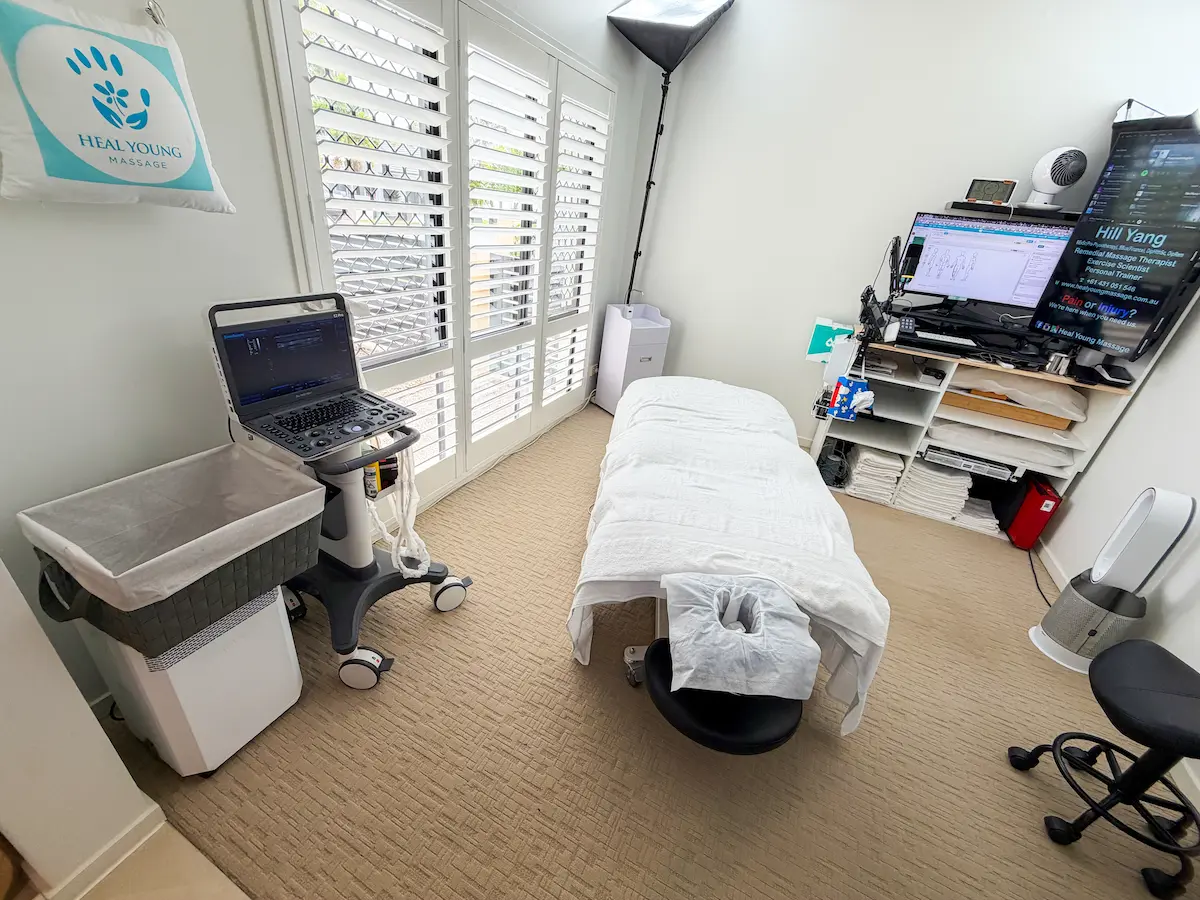
- A quiet, adjustable space. The clinic is very quiet and the lights can be dimmed. Your child can be in whatever position feels comfortable — on the table, sitting, or on the floor — and movement breaks are always fine. You’re welcome to bring a favourite toy or anything else that helps.
Ages 3 to 18
Sessions for neurodivergent children at different ages
Children generally start with a 30-minute session and stay there as long as it suits them. Attention span is usually the limiting factor, not how much hands-on work they can tolerate.
Short and close to you
Young children usually start with a short session sitting on or right next to a parent, often on the floor rather than the table, in whatever position feels safe. Play and movement lead, touch is minimal, and we stop when they’ve had enough.
Movement and hands-on
Primary-school children generally start at 30 minutes, split between movement tasks and hands-on work. The table is optional — sitting works too.
Teenagers, with a parent present
Teenagers book 30 minutes too. We can talk about sport, school load, sleep and recovery — and a parent or carer is still in the room throughout. If sport is the main focus, see junior athlete massage.
Working within my scope
Alongside your child’s team, not instead of it
- I don’t diagnose, and I don’t carry out developmental screening or judge milestones.
- Sessions don’t replace your child’s GP, paediatrician, occupational therapist, speech pathologist, psychologist or physiotherapist.
- If you have concerns about your child’s development, the right first step is your GP, paediatrician or a child health check. I can describe what I observe in how your child moves, but I don’t interpret it as a diagnosis.
- If your child already has a care team, you’re welcome to share relevant reports, and I’m happy to work in with their plan.
You don’t need a referral to book.
Safety first
When to see a doctor before booking
- A new or unexplained limp, or your child refusing to walk or put weight on a leg
- Pain that wakes your child at night
- Fever or feeling unwell, or a joint that is hot, red or swollen
- Back pain in a young child that doesn’t settle within a few days
- Losing skills they already had, or new weakness or clumsiness
- Unexplained bruising, weight loss or ongoing tiredness
- Any pain after a fall, knock or sporting injury that isn’t improving
If any of these apply, please see your GP first — not a massage appointment. If your child is very unwell, go to the nearest emergency department or call 000.
Questions parents ask
Common questions
Is massage a therapy for autism or ADHD?
No, and I don’t offer it as one. I don’t treat autism, ADHD or any developmental condition. Sessions with neurodivergent children focus on movement, muscle tension and comfort with touch, alongside the care your child already receives. Individual experiences vary.
Do I stay in the room?
Yes, always. A parent or carer stays in the room for the whole session, for children and teenagers alike, with no exceptions.
What if my child doesn’t want to be touched?
Then we don’t touch. The session can focus on movement and play instead, and your child can stop at any time. Touch is only introduced slowly, with an explanation first, when your child is comfortable.
How long is a session, and what ages do you see?
I see children and teenagers aged 3 to 18. Sessions generally start at 30 minutes, and younger children may finish earlier if they’ve had enough.
Do I need a referral?
No, you don’t need a referral to book. If your child sees a paediatrician, OT, physiotherapist or other practitioner, you’re welcome to share relevant information so I can work in with their plan.
Can I use NDIS funding?
No. The NDIS therapy supports guidelines state that massage therapy, including remedial massage, isn’t an NDIS support, even when an allied health professional has recommended it. Remedial massage may be claimable under private health extras cover, and HICAPS is available at the clinic. Check your rebate with your fund before booking.
Will you tell me whether my child is developing normally?
No. I don’t carry out developmental screening or judge milestones. If you have concerns about your child’s development, please speak with your GP, paediatrician or child health nurse. I can describe what I notice in how your child moves, but not what it means diagnostically.
Start with 30 minutes
A short first visit in Varsity Lakes for neurodivergent children and their families — at your child’s pace, with you in the room. When booking online, choose a 30-minute remedial massage and add a note about anything that helps your child feel comfortable.
Book onlineEducational content only. Not medical advice. Individual results vary. Hill Yang is an ESSA Accredited Exercise Scientist (AES #17005) and Remedial Massage Therapist (MMA #031045). Sessions do not diagnose or treat autism, ADHD or any developmental condition and do not replace care from your child’s GP, paediatrician or allied health team.