Hip flexor Gold Coast · Varsity Lakes clinic
Hip and pelvis pain and the way you walk
Tight hip flexors, a sore hip when you lie on your side, a lower back that aches after a long walk. I look at how your hip, pelvis and trunk share the load when you move, then work hands-on with what I find. Assessment-led remedial massage in Varsity Lakes.
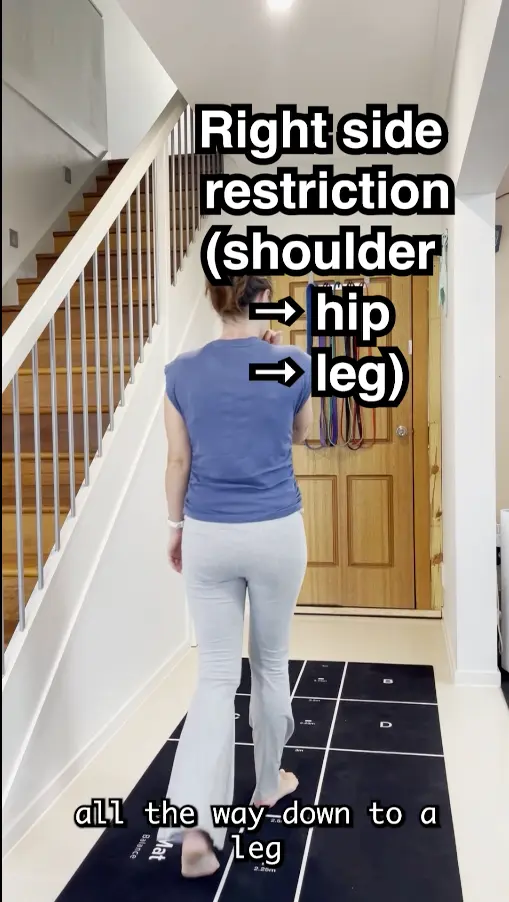
Walking is the movement I watch most closely. It’s what almost everyone wants back: walking further, along the beach or up the stairs, without thinking about their hip. Hip and pelvis patterns usually show up in the way someone walks well before they show up on the table, so that’s where my assessment starts.
Hip flexor tightness
Why hip flexors stay tight
Tight hip flexors are one of the most common things people mention when they book. Stretching is usually the first thing they try, and for many people it only helps for a while.
That’s often because the tightness is doing a job. When the pelvis and trunk aren’t sharing the load well, the hip flexors can hold tension to keep you steady. Stretch them without changing that pattern, and they tend to tighten up again.
On the Gold Coast I see this across very different lives: people who sit at a desk most of the day, runners building distance, surfers who paddle and pop up, and climbers who spend hours in high-knee positions.
Long hours sitting
The hip rests in a shortened position for most of the day. Many people notice it most when they first stand up.
Changes in training load
More running distance, hill work, paddling or kicking often comes just before hip tightness is noticed.
Pelvic control
When the pelvis and trunk aren’t sharing the load, the hip may pick up extra work to keep you stable.
Common presentations
What clients commonly report
- A tight or pulling feeling at the front of the hip
- An ache on one side of the lower back, just above the hip, when standing tall
- Stiffness getting up from a chair or out of the car
- Hip or buttock discomfort when lying on one side at night
- Deep buttock discomfort, sometimes described as piriformis-related
- Squats, lunges or long strides feeling restricted
- Discomfort that builds with hills, stairs or more running distance
- A shorter step on one side, or a limp others notice before you do
Many people I see have had a hip that feels like this for months or years, and have already tried several approaches. That’s the group I work with most often.
Walking assessment
What I look for when you walk
As an ESSA Accredited Exercise Scientist, I observe walking as a whole-body pattern rather than a hip in isolation. Small details here often tell me more than any single test on the table.
Stride length
Is one step shorter than the other, and does that change when you speed up?
Push-off
Does the hip extend behind you, or does the lower back take over the work?
Pelvis level
Does one side drop or hitch as you step through?
Trunk and arm swing
Is the upper body rotating with you, or held stiff to protect the hip?
Rhythm and load
Is timing and weight even between left and right?
Everyday transitions
Stairs, standing up, turning. This is where real-life walking happens.
Where it’s useful, I also use objective tools such as force plate assessment to compare how load is shared between your left and right sides. It turns “it feels uneven” into something we can both see and track over time.
Finding the driver
Hip, lower back or sciatica?
Hip, lower back and sciatic-type symptoms overlap a lot. A tight hip can change how the lower back moves, and irritation around the lower back or buttock can be felt in the hip and down the leg.
That’s why I don’t start with the sore spot. I start with the pattern, and then work out which area is carrying more than its share.
Mainly lower back?
My back pain page is the better place to start.
Pain travelling down the leg?
Read the sciatica page first.
Front, side or back of the hip, or changes in walking?
You’re in the right place. Read on.
How a session works
Assessment first, then hands-on
Every session follows the same assessment-led approach. Movement assessment sits within my ESSA scope; hands-on work sits within my remedial massage scope.
Conversation
What you’ve noticed, when it started, what you’ve tried, and what you want to be able to do again.
Movement & walking
Hip range in every direction, pelvis and mid-back, glute activation, and walking observation.
Hands-on assessment
Palpation of the hip flexors, glutes, deep hip rotators, lower back and surrounding fascia.
Dynamic Myofascial Release
You move while I work, with guided breathing, so we work with the pattern you actually use. About DMFR.
Re-check & your plan
We walk again and compare, and you leave with one or two strategies to use at home.
“I’m not aiming for a hip that just feels looser on the table. I’m aiming for you to understand what your hip is doing when you walk, and what you can do about it yourself.”
— Hill Yang · Remedial Massage Therapist · Exercise ScientistSafety first
When to see a doctor first
- A fall or knock to the hip and you can’t put weight through the leg
- Hip pain that wakes you at night and doesn’t ease when you change position
- Fever or feeling generally unwell along with hip or groin pain
- A new lump or swelling in the groin
- A hip that suddenly locks, catches or won’t move
- Numbness in the groin or saddle area, or changes in bladder or bowel control. Seek urgent medical care.
- A history of cancer, or weight loss you can’t explain
- A recent hip replacement or other hip surgery. Check with your surgeon before booking.
If anything on this list applies, I’ll ask you to have a medical assessment before we work together. It’s not a barrier. It’s the safest order of steps.
What to expect
Common questions
Can massage help with hip flexor tightness?
Remedial massage may help reduce the sense of tightness, and some clients report moving more freely afterwards. How long that lasts usually depends on what is driving the tightness, which is why I assess how you move and walk, not only the muscle itself. Individual results vary.
Why does my lower back hurt when my hip is tight?
When the hip doesn’t extend well behind you, the lower back often makes up the difference, especially when you stand tall or walk with a long stride. People commonly describe this as an ache on one side of the lower back, just above the hip. Looking at the hip and back together is usually more useful than working on either one alone.
What is piriformis-related pain?
The piriformis is a small muscle deep in the buttock that helps rotate and steady the hip. Some people feel deep buttock discomfort in this area, sometimes called piriformis syndrome. Similar symptoms can come from the lower back or the hip joint, so it’s worth seeing your GP if symptoms travel down the leg or aren’t changing.
How is this different from sciatica?
Sciatica describes symptoms that travel along the path of the sciatic nerve, often down the back of the leg. Hip and buttock tightness can feel similar. I look at both during your assessment and will refer you to your GP if nerve-related signs need medical follow-up. My sciatica page explains more.
Do I need to stretch every day?
Not necessarily. For some people, stretching adds more demand to a hip that is already working hard to keep them stable. I’d rather give you one or two strategies that suit what I see in your assessment than a long, generic routine.
Do you look at how I walk, or just massage?
Both. Walking observation is part of every hip and pelvis assessment. As an ESSA Accredited Exercise Scientist (AES #17005) I assess movement, and as a Remedial Massage Therapist (MMA #031045) I work hands-on with what that assessment shows.
Can I claim with my private health fund?
Remedial massage may be claimable under extras cover, depending on your fund and level of cover. On-the-spot claiming through HICAPS is available at the clinic. Check your rebate with your fund before your appointment.
Explore further
The clinic is at 21 Meridien Avenue, Varsity Lakes. Clients come from Varsity Lakes, Robina, Burleigh Heads, Mudgeeraba, Reedy Creek and across the southern Gold Coast.
Want to walk with more confidence?
Book an in-clinic assessment in Varsity Lakes, or start with an online movement assessment if you’re not local.
Educational content only. Not medical advice. Individual results vary. Hill Yang is an ESSA Accredited Exercise Scientist (AES #17005) and Remedial Massage Therapist (MMA #031045). Always consult a qualified health professional for personal health concerns.