
Originally published April 2018 · Expanded May 2026

Inside the Commonwealth Games Medical Team
at GC2018
What it means to be part of a multi-disciplinary sports medicine team at a Commonwealth Games — and what working with elite athletes at the highest level teaches you about the body.
The Experience
Gold Coast 2018 — on the Commonwealth Games medical team
In April 2018, I had the privilege of serving on the Commonwealth Games medical team at Gold Coast 2018 — right here on home ground. For 11 days, I worked alongside a full multi-disciplinary team: doctors, sports physicians, physiotherapists, sports physiotherapists, nurses, medics, and first responders, all focused on one shared purpose — keeping athletes healthy and competition-ready.
It was one of the most formative experiences of my career. Not just because of the environment — though the atmosphere of a multi-sport Games at this scale is genuinely unlike anything else — but because of what you learn when you’re working on the bodies of the world’s best athletes, day after day, under the highest possible performance demand.
“When I touch the athletes, I can almost read their performance from the condition of muscle and tendon — tissue quality tells a story that numbers alone cannot.”
— Hill Yang · Remedial Massage Therapist, GC2018 Medical Team
The Team
A multi-disciplinary approach to athlete care
At the Games, sports medicine isn’t a single discipline — it’s an integrated system. Each practitioner brings a different lens to the same athlete. Understanding how each role contributes is what makes the team effective.
Sports Physicians & Doctors
Diagnosis, acute injury management, and medical clearance for competition.
Physiotherapists
Structural assessment, rehabilitation programming, and load management through the competition schedule.
Remedial Massage Therapists
Soft tissue preparation, recovery support, and monitoring the physical state of muscle, tendon, and connective tissue between events.
Nurses & Medics
Clinical care and medical procedure support throughout the athlete village and competition venues.
First Responders
On-field emergency response and immediate care at competition venues across the Gold Coast.
The integrated model
Shared athlete notes, daily briefings, and cross-referral — so no signal about an athlete’s readiness is missed.
“There’s a reason elite athletes don’t rely on a single practitioner. The multi-disciplinary model exists because the body doesn’t present problems in isolation — and the best care addresses it the same way.”
The Role of Remedial Massage
What soft tissue work contributes at Games level
People sometimes wonder where massage fits within a Commonwealth Games medical team. The answer becomes clear quickly when you’re working in that environment.
At competition level, the challenge isn’t always injury — it’s the accumulation of load. Athletes are competing across multiple days, sometimes multiple events per day, with minimal recovery time between rounds. Soft tissue work plays a role in supporting the physical recovery processes between sessions — addressing restrictions, reducing tension in structures that are overworked, and supporting the athlete’s sense of readiness heading into their next event.
Beyond the hands-on component, there’s an informational dimension. Working closely with an athlete’s tissue over time — or even within a single session — builds a picture of how they’re responding to training load, where tension is accumulating, and whether the body’s signals align with what the athlete reports. That information, shared with the broader team, contributes to decisions about readiness and risk.
Clinical Observation
Tissue quality is a form of information. Muscle tone, tendon texture, fascial density, and the way structures respond under pressure all reflect the athlete’s recent history — their training volume, recovery quality, stress load, and proximity to peak condition.
At GC2018, working with athletes in the days before and after their events, I observed how consistently tissue state reflected readiness. It’s not a definitive measure on its own, but as one input within a multi-disciplinary assessment framework, it carries real weight.
“The only way to get the Gold is the discipline. You see it in the tissue before you ever see it on the scoreboard.”
— Hill Yang · GC2018
What It Taught Me
Lessons from working at the highest level
The body doesn’t lie
Elite athletes are skilled at managing their presentation — they train through discomfort and rarely show vulnerability. What you feel under your hands often adds information the athlete’s own report doesn’t. It isn’t a test on its own, but read alongside the rest of the team’s assessment, it helps. Learning to read that signal well takes years of clinical exposure.
Recovery is where performance is built
At Games level, every practitioner on the team understands that training stimulus alone does not create adaptation — recovery does. The role of soft tissue work isn’t separate from performance; it’s a direct input into the athlete’s capacity to absorb training and return to competition ready.
Discipline shows in tissue
The athletes who stood out — in terms of tissue quality and physical readiness — were almost universally the ones whose preparation had been consistent, methodical, and long-term. Discipline isn’t just a mindset. Over years, it becomes structural. You can feel it.
The practitioner grows alongside the athlete
Working at this level raised my own standards. The precision required — in assessment, in technique, in communication across a multi-disciplinary team — compresses professional development in ways that are difficult to replicate in any other context. I came away a more accurate practitioner.
Looking Ahead
LA28 and Brisbane 2032
GC2018 was a starting point, not a destination. Since then, the goal has been clear: build the clinical depth and the professional relationships to be part of the medical team at LA28 and, ultimately, Brisbane 2032 — when the Games return to Australia.
That means continuing to work at the intersection of remedial massage and exercise science, deepening the evidence base for soft tissue work in elite sport, and building a practice on the Gold Coast that serves both the everyday client and the serious athlete.
If you’re a competitive athlete — at any level — the same principles that apply at Commonwealth Games level apply to your training and recovery. The tools are the same. The discipline is the same. The pathway to your ceiling begins with understanding where you are now — which is why I use force plate assessment alongside hands-on work. For younger competitors, see junior athlete massage.
Working with an athlete?
Let’s talk.
Whether you’re preparing for competition, managing a training load, or returning from injury — bring your goals and we’ll build the right plan.
The observations described in this post reflect personal professional experience during the Gold Coast 2018 Commonwealth Games. They are intended as general information only and do not constitute medical advice, diagnosis, or guaranteed clinical outcomes. Individual results vary. For medical concerns, please consult a qualified health professional.
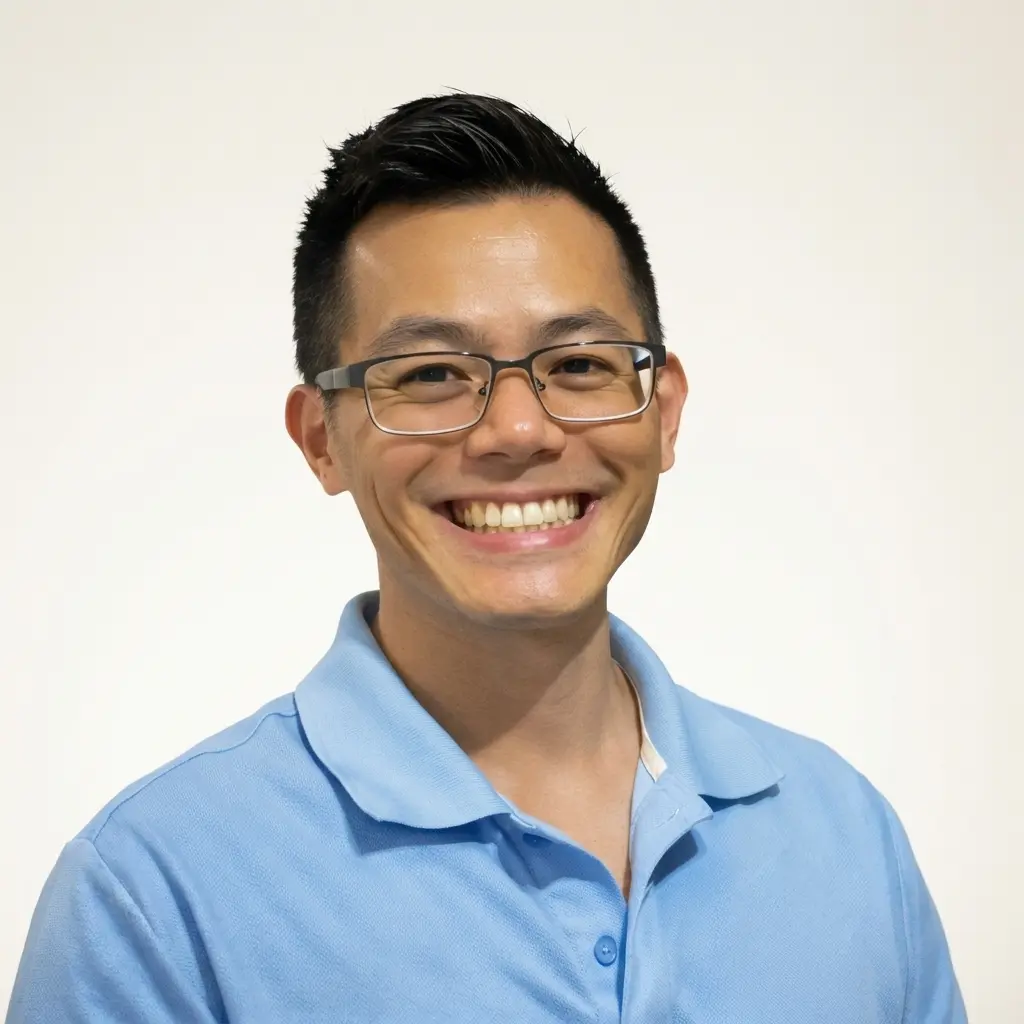
About the Author
Hill Yang
Hill has more than 20 years of clinical experience and over 25,000 hands-on sessions. He combines remedial massage with movement assessment, including force plate and motion-capture tools, to understand how load moves through the body. Hill was part of the medical team at the 2018 Commonwealth Games and is a finalist in the 2026 Australian Small Business Champion Awards (Health Improvement Services). He practises at Heal Young Massage in Varsity Lakes, Gold Coast, and offers sessions in English and Mandarin.