What Is Myofascial Dry Needling?
Dry needling uses acupuncture-type needles to target myofascial trigger points — but it is not acupuncture. Here’s what the technique involves, how it differs from Traditional Chinese Medicine, and what the experience is like.
The Basics
Same Needle, Different Purpose
Myofascial dry needling uses the same thin filiform needles as acupuncture — but the theory behind it, the target sites, and the technique itself are fundamentally different. Where acupuncture is rooted in Traditional Chinese Medicine (TCM) and works along meridian lines, dry needling is grounded in Western myofascial science and targets specific trigger points within muscle tissue.
The term “dry” distinguishes it from injection needling — no substance is injected. The needle itself is the intervention, and its effect comes from where it is placed, how it is moved, and the physiological response it creates in the tissue.
At Heal Young Massage, dry needling is integrated into an assessment-led treatment approach. The needle is a tool — not a stand-alone session. It is selected when the assessment identifies trigger points or fascial restrictions that are most effectively addressed with needling, and it is combined with other manual therapy techniques as appropriate.

How It Works
Three Mechanisms Behind Myofascial Dry Needling
Finding the Source
A myofascial trigger point is a hyperirritable spot within a taut band of muscle tissue — commonly described as a “knot.” Trigger points can produce localised pain and may refer sensation to other areas of the body. Dry needling targets these points directly, placing the needle into the taut band to produce a response.
The Reflex Response
When the needle reaches a trigger point, a local twitch response may occur — a brief, involuntary contraction of the muscle fibre. This response is considered clinically significant and is associated with the release of muscle tension in the targeted band. The needle is moved or rotated to elicit this response, which distinguishes dry needling technique from acupuncture, where needles are typically left stationary.
Stimulating Repair
Needling creates controlled micro-trauma at the target site, which initiates a localised inflammatory response. This process recruits healing factors to the area and may support the resolution of chronic tissue changes associated with longstanding trigger points or fascial restriction. The aim is to interrupt a self-perpetuating cycle of muscle tension and restricted blood flow.
“Dry needling is not acupuncture with a different name. It targets specific myofascial trigger points using a Western anatomical framework — the needle is selected when the assessment indicates it is the most appropriate tool for the specific tissue finding.”
— Hill Yang · Remedial Massage Therapist & Exercise Scientist · ESSA #17005 | MMA #031045
Understanding the Difference
Dry Needling vs Traditional Chinese Medicine Acupuncture
Both modalities use the same type of needle — but the theory, the target sites, and the intended mechanism are entirely different. Understanding this distinction helps set the right expectations for each.
Western Myofascial Framework
- Targets myofascial trigger points within muscle tissue
- Based on anatomy and neuromuscular physiology
- Needle is moved or rotated to elicit a local twitch response
- Target sites are identified through palpation and movement assessment
- Mechanism: trigger point release, micro-inflammation, fascial response
- Integrated with manual therapy as part of an assessment-led session
Traditional Chinese Medicine Framework
- Targets points along meridian lines based on TCM theory
- Based on traditional concepts of Qi and energy flow
- Needles are typically left stationary for a period of time
- Target sites are selected based on TCM diagnosis and pattern
- Broader scope including systemic and organ-related presentations
- Delivered as a standalone modality or within TCM practice
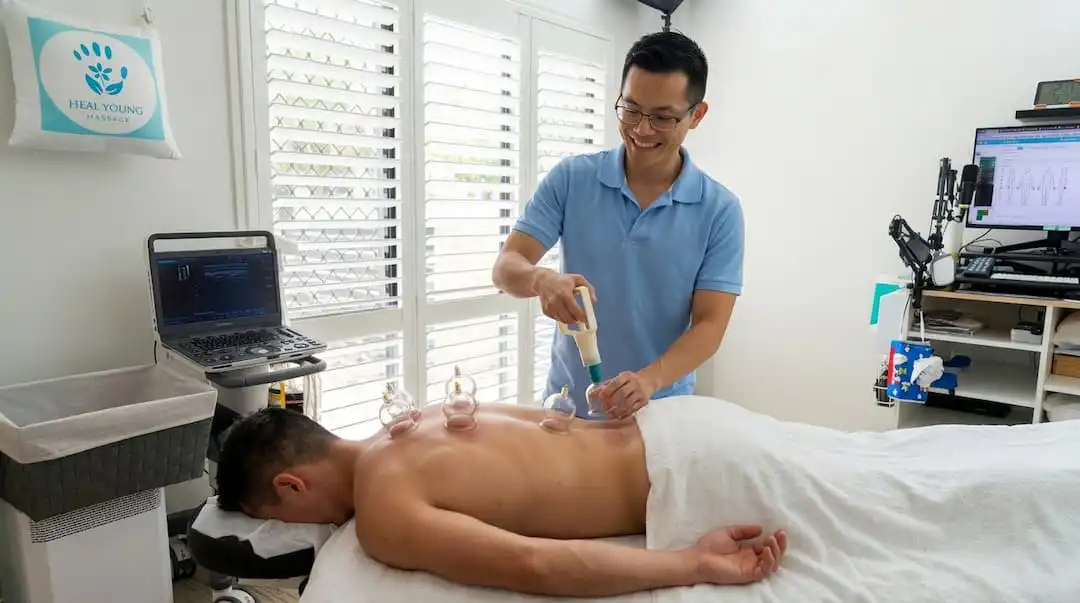
Hill also offers TCM-style massage (Tui Na) and TCM cupping as separate modalities. These are delivered based on an integrated assessment that draws on both Western exercise science and TCM frameworks as appropriate to the presentation.
Clinical Applications
Presentations Where Dry Needling May Be Appropriate
Dry needling is most relevant when trigger points or fascial restrictions are identified during assessment as contributing to the clinical picture. It is one tool within a broader treatment approach — not a stand-alone solution. Presentations where it may be incorporated include:
Whether dry needling is appropriate for a specific presentation is determined during the assessment at the start of each session. If it is indicated, it will be discussed and consented to before proceeding.
During a Session
What to Expect
Suitability
Who Dry Needling Is and Isn’t Suited To
Dry Needling May Be Appropriate For:
- Adults with identifiable trigger points or taut muscle bands
- Chronic or recurring muscular tension patterns
- Restricted range of motion with myofascial contribution
- Athletes with localised soft tissue complaints
- Presentations where hands-on techniques alone have had limited effect
Dry Needling Requires Caution or Is Not Performed For:
- Needle phobia or significant anxiety about the procedure
- Blood clotting disorders or anticoagulant medication
- Pregnancy (particularly certain sites)
- Active skin infection, open wound, or localised inflammation at the target site
- Compromised immune function
- Lack of clear informed consent
If you are unsure whether dry needling is appropriate for your situation, please mention it when booking and it will be discussed at your assessment. There is no obligation to include dry needling — all treatment decisions are made collaboratively.
The Full Treatment Menu
Modalities Available at Heal Young Massage
Dry needling is one part of a broader toolkit. Depending on what the assessment finds, any combination of the following may be incorporated into your session. You can also request specific modalities, and Hill will advise on the most appropriate approach for your presentation.
Book a Session
Dry Needling at
Heal Young Massage
Varsity Lakes, Gold Coast QLD 4227
Clean linen · Fresh air · HEPA filtration
Get directions →
Hill Yang · ESSA #17005 · MMA #031045

About the Author
Hill Yang
Hill has more than 20 years of clinical experience and over 25,000 hands-on sessions. He combines remedial massage with movement assessment, including force plate and motion-capture tools, to understand how load moves through the body. Hill was part of the medical team at the 2018 Commonwealth Games and is a finalist in the 2026 Australian Small Business Champion Awards (Health Improvement Services). He practises at Heal Young Massage in Varsity Lakes, Gold Coast, and offers sessions in English and Mandarin.