Education & Training · About Hill Yang
The Core of a Remedial Massage Therapist:
Why Continuing Education Never Stops
To maintain professional membership as a remedial massage therapist in Australia, a minimum of 40 Continuing Professional Education (CPE) points per year is required. It is a floor, not a ceiling. For many practitioners, 40 points is the target. For me, it has never been close to enough.
I have accumulated over 100 CPE points per year for seven consecutive years, over 200 for six of those years, and over 300 for the past three. That is not a number I mention to impress — it is context for how I think about knowledge and its role in clinical practice.
Annual CPE points — Hill Yang
for 7 consecutive years
for 6 years
for the last 3 years
requirement per year
What CPE actually means
CPE — Continuing Professional Education — covers any structured learning that develops a practitioner’s clinical knowledge or skill. That includes workshops, courses, conferences, supervised practice, research reading, and formal post-graduate study. Massage & Myotherapy Australia, ESSA, and AUSactive all require annual CPE as a condition of membership and, by extension, health fund recognition.
The system exists because a qualification is a starting point, not an endpoint. The research base for manual therapy, exercise science, and musculoskeletal health changes constantly. A practitioner working from knowledge that stopped updating five years ago is, practically speaking, not offering the same standard of care as one who has kept pace with the field.
What CPE looks like in practice
My ongoing education has included post-graduate study in Anatomy Trains myofascial meridians, strength and conditioning, functional movement assessment, dry needling, VALD ForceDecks force plate technology, sports performance, and conference attendance across manual therapy, exercise science, and allied health. The full record is on the Post-Grad Education & Experience page.
The honest picture
February 2022 — when this post was first written — was a genuinely hectic month. I was working seven days a week in clinic and completing 6–10 hours of study and training across weekends, often late at night. That is not a sustainable pace forever, but it reflects something real: I find this work interesting. The clinical questions that come up in sessions push me back into the research. The research changes how I approach the next session.
“Knowledge and ongoing training are not extras on top of the job. They are the job.”
This matters for clients because the gap between a practitioner doing the minimum and one pursuing the field seriously shows up in the room. It shows up in how an assessment is structured, in what techniques are applied and why, in whether the practitioner can explain what they are observing and connect it to the broader picture of your health. The assessment-led approach I use only works if the assessment is grounded in current, accurate knowledge.
Why I keep going
Part of it is professional obligation — staying current is what it means to hold the credentials I hold. But a larger part is that the field keeps giving me new things to work with. The integration of fascial restriction assessment with force plate technology is a recent example: two bodies of knowledge that didn’t obviously connect until they did, and that connection changed how I think about performance and pain in the same client.
I moved to the Gold Coast in part because of the training and education infrastructure here — the proximity to high-performance sport, the practitioners I can learn from, the path toward Brisbane 2032. That journey requires staying at the front of the field, not keeping up with it.
If you want to understand more about the background and training that informs the work, the Post-Grad Education & Experience page has the full record, and the Why Heal Young Massage page explains the broader philosophy.
CPE records
A selection of continuing education certificates


Ready to work with a practitioner who keeps learning?
Book a Discovery Assessment at Varsity Lakes, or start with an online movement assessment from anywhere.
Educational content only. Not medical advice. Always consult a qualified health professional for personal health concerns.
About the Author
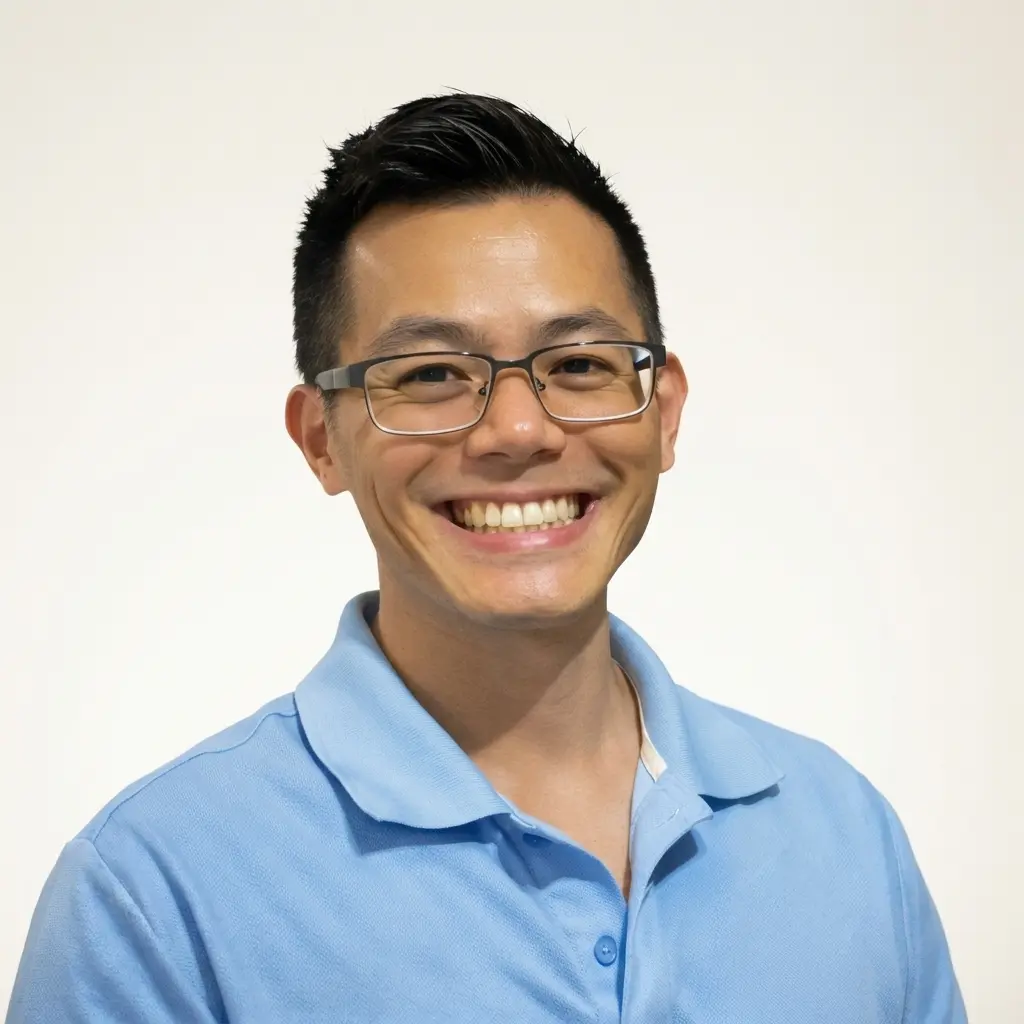
Hill Yang
Hill has more than 20 years of clinical experience and over 25,000 hands-on sessions. He combines remedial massage with movement assessment, including force plate and motion-capture tools, to understand how load moves through the body. Hill was part of the medical team at the 2018 Commonwealth Games and is a finalist in the 2026 Australian Small Business Champion Awards (Health Improvement Services). He practises at Heal Young Massage in Varsity Lakes, Gold Coast, and offers sessions in English and Mandarin.